WORKSHOPS
Go deeper before the conference gets underway.
Two hours. Focused participation. Deeper learning.
Add a workshop to your Lab Design Conference experience and spend Monday afternoon exploring the real-world decisions that shape successful laboratory projects.
Choose from three interactive workshops, exchange perspectives with experts and peers, and leave with practical ideas you can bring back to your own work.
Why add a workshop?
Two focused hours to go beyond the presentation.
Conference sessions give you access to projects, perspectives, lessons learned, and new ideas.
Workshops give you more room to work with them.
These interactive experiences create additional opportunities to participate, work through challenges, exchange perspectives, and engage more directly with instructors and peers.
MORE INTERACTIVE LEARNING
Go beyond listening with opportunities to participate, ask questions, and engage directly with the ideas being explored.
HANDS-ON APPLICATION
Work through practical exercises, scenarios, case studies, facilitated discussions, or other applied activities.
CROSS-DISCIPLINARY PERSPECTIVES
Hear how people approaching laboratory projects from different roles and responsibilities think about the same challenges.
TWO HOURS OF FOCUS
Spend dedicated time exploring one issue rather than fitting it into a traditional conference session.
Different roles. One shared project.
Better laboratory environments depend on more than one perspective.
The decisions that shape a laboratory don’t affect just one discipline.
They influence the people who design the space, the teams responsible for delivering it, the professionals who operate and maintain it, and the scientists, researchers, technicians, and other end users who ultimately depend on it every day.
The 2027 workshops bring those perspectives into the same conversation.
DESIGN + PLANNING
Architects, engineers, lab planners, and designers
PROJECT + FACILITIES
Construction, facilities, capital planning, and project professionals
LAB END USERS
Lab managers, scientists, researchers, technicians, and operations leaders
SAFETY + OPERATIONS
EH&S professionals and others responsible for safe, effective laboratory operations
choose your workshop
Three challenges. Three different ways to dig deeper.
Each workshop tackles a different part of creating laboratory environments that work—from determining whose input should shape the project, to addressing safety throughout the project lifecycle, to making design decisions that support successful long-term operations.
Start with the challenge most relevant to you.
Workshop 01
From Programming to Punch List: Designing Labs That Work
How do we design labs that continue to work after occupancy? Explore the full laboratory project lifecycle and the decisions that affect operations, maintenance, flexibility, commissioning, move-in, and long-term performance.
Strong fit if you’re thinking about:
Design decisions + operations + long-term performance
Workshop 02
Safety by Design: From Concept to Lab Operations
How do we prevent project decisions from becoming operational safety problems? Explore how decisions made during planning, design, construction, renovation, commissioning, and occupancy can affect the way people safely work within a laboratory.
Strong fit if you’re thinking about:
Safety + risk + design decisions + laboratory operations
Workshop 03
The Right Voices: Better Information, Better Lab Design
How do we make sure the right people—and the right information—shape the project? Learn how to identify and engage the stakeholders whose knowledge should influence laboratory planning and design decisions before costly gaps or misunderstandings emerge.
Strong fit if you’re thinking about:
Stakeholders + communication + requirements + decision-making
Workshop 01
From Programming to Punch List: Designing Labs That Work
Design for opening day—and everything that comes after it.
A successful laboratory isn’t simply a space that meets its program when the doors open. It needs to remain safe, understandable, supportable, adaptable, and financially sustainable long after the design and construction teams have left.
This interactive workshop brings together two perspectives that don’t always get enough opportunity to learn from one another: the people who design laboratory environments and the people responsible for making those environments work every day.
Participants will work through the laboratory project lifecycle—from initial programming through occupancy—to identify decisions with long-term operational consequences and explore practical ways to avoid common disconnects between design intent and day-to-day use.
Drawing from real project experiences and lessons learned from recently completed laboratory projects across academic and research settings, attendees will collaborate to build a best-practices checklist they can apply to future projects.
Two perspectives. One laboratory.
THE DESIGN PERSPECTIVE
How architects and lab planners translate research, teaching, operational, safety, flexibility, and organizational goals into a physical environment.
THE OPERATIONAL PERSPECTIVE
How architects and lab planners translate research, teaching, operational, safety, flexibility, and organizational goals into a physical environment.
What you’ll work on
- Identifying programming and design decisions that can significantly affect long-term laboratory operations and performance
- Recognizing disconnects between design intent and day-to-day operations, maintenance, and facility management
- Finding better ways to engage researchers, faculty, technicians, EH&S, facilities staff, and other operational stakeholders throughout the project lifecycle
- Exploring post-occupancy approaches that can support commissioning, move-in, ongoing operations, and long-term laboratory performance
Who it’s for
This workshop may be a strong fit if you’re involved in planning, designing, operating, maintaining, or supporting laboratory environments and want to better understand how decisions made early in a project affect what happens after occupancy.
It is especially relevant for professionals who want to bridge the gap between design intent and operational reality.
Workshop leaders

Dwayne Henry
Instructional Lab Manager of Chemical and Biological Sciences, Montgomery College—Takoma Park/Silver Spring Campus
View profile
Regal Leftwich, FAIA
Principal and Director of Laboratory Planning, Hanbury
View profileWORKSHOP DETAILS
Monday, May 10, 2027
2:30–4:30 PM
$215 per person
AIA Credits Available
Workshop 02
Safety by Design: From Concept to Lab Operations
Make safety part of the project—not something addressed after the fact.
Laboratory safety is about more than meeting codes and providing the right safety equipment.
Decisions made during planning, design, construction, renovation, and commissioning can have lasting consequences for how safely a laboratory operates—and whether the finished environment actually supports the way people work.
Through real-world scenarios and facilitated discussion, this interactive workshop examines how architects, lab planners, engineers, contractors, facility professionals, EH&S teams, and laboratory end users can work together to identify and address potential safety risks before they become operational problems.
Participants will explore issues including hazardous materials, workflows and adjacencies, ventilation and utilities, emergency response, construction and renovation hazards, equipment placement, access and egress, change management, and gaps between design intent and day-to-day laboratory use.
What you’ll work on
- Identifying safety risks that can emerge throughout planning, design, construction, renovation, commissioning, and occupancy
- Evaluating how workflows, hazardous materials, equipment, utilities, ventilation, adjacencies, access, and emergency response requirements should influence project decisions
- Bringing end users, designers, engineers, contractors, facilities professionals, and EH&S personnel into safety-related conversations throughout a project
- Identifying gaps between design intent and real-world laboratory operations and using lessons learned to support safer, more resilient environments
Who it’s for
Choose this workshop if your work intersects with laboratory safety, design, engineering, facilities, construction, project delivery, EH&S, or day-to-day laboratory operations.
It will be especially valuable if you want to better understand how decisions made throughout a project can either reduce risk early—or create challenges that laboratory teams must manage later.
Workshop leaders

Julianne Baron, PhD, CPH, RBP, CC
President and Owner, Science and Safety Consulting
View profile
Scott Hanton, PhD
Group Editorial Director, Lab Manager
View profileWORKSHOP DETAILS
Monday, May 10, 2027
2:30–4:30 PM
$215 per person
AIA Credits Available
Workshop 03
The Right Voices: Better Information, Better Lab Design
Better decisions start with better information.
Successful laboratory projects depend on accurate information. But how does a design team know whether the people providing that information truly represent the needs of the organization?
And how can laboratory leaders make sure the operational knowledge of the people who actually work in these spaces is heard before critical decisions are made?
This interactive workshop introduces a practical framework for identifying and engaging the right stakeholders before key design decisions occur.
Participants will explore how to distinguish between decision-makers, subject matter experts, influencers, and end users while uncovering the operational knowledge that can make—or break—a project.
Lab users will gain strategies for identifying the voices that should be included in planning discussions and advocating for meaningful participation. Architects, laboratory planners, and engineers will explore ways to validate information and engage the right people throughout the design process.
What you’ll work on
- Identifying the roles and responsibilities of key stakeholders involved in laboratory planning
- Using stakeholder mapping techniques to determine whether the right people are influencing design decisions
- Recognizing communication gaps and organizational dynamics that can lead to incomplete or inaccurate project requirements
- Developing practical approaches for validating operational information, improving stakeholder engagement, and reducing costly redesigns
Who it’s for
This workshop may be a strong fit if you’re responsible for gathering project requirements, representing laboratory users, facilitating planning conversations, communicating operational needs, or determining whose input should shape laboratory design decisions.
It is designed to offer value from both sides of the conversation: laboratory professionals who need their operational expertise heard and design professionals who need reliable information to make better project decisions.
Workshop leaders

Shrei Crenshaw, BS, HT(ASCP)CM
Founder and Principal Consultant, The Crenshaw Method
View profile
Chris Orlando, RN, BSN
VOC Associates
View profileWORKSHOP DETAILS
Monday, May 10, 2027
2:30–4:30 PM
$215 per person
AIA Credits Available
Less listening. More doing.
What is a Lab Design Conference workshop experience like?
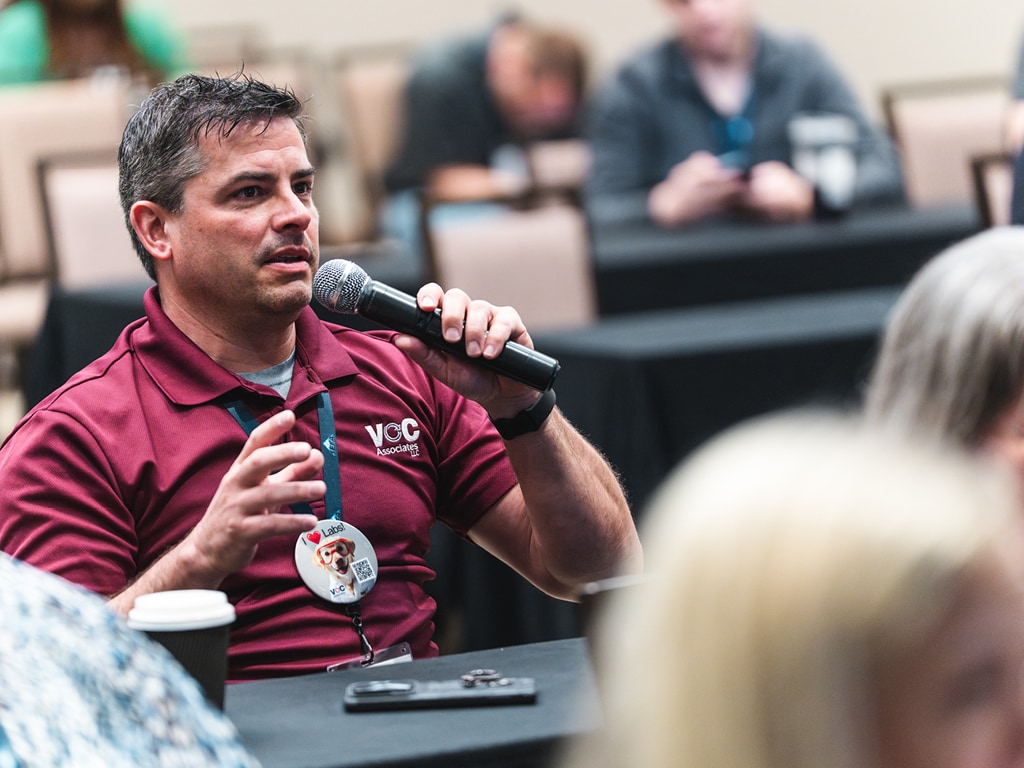
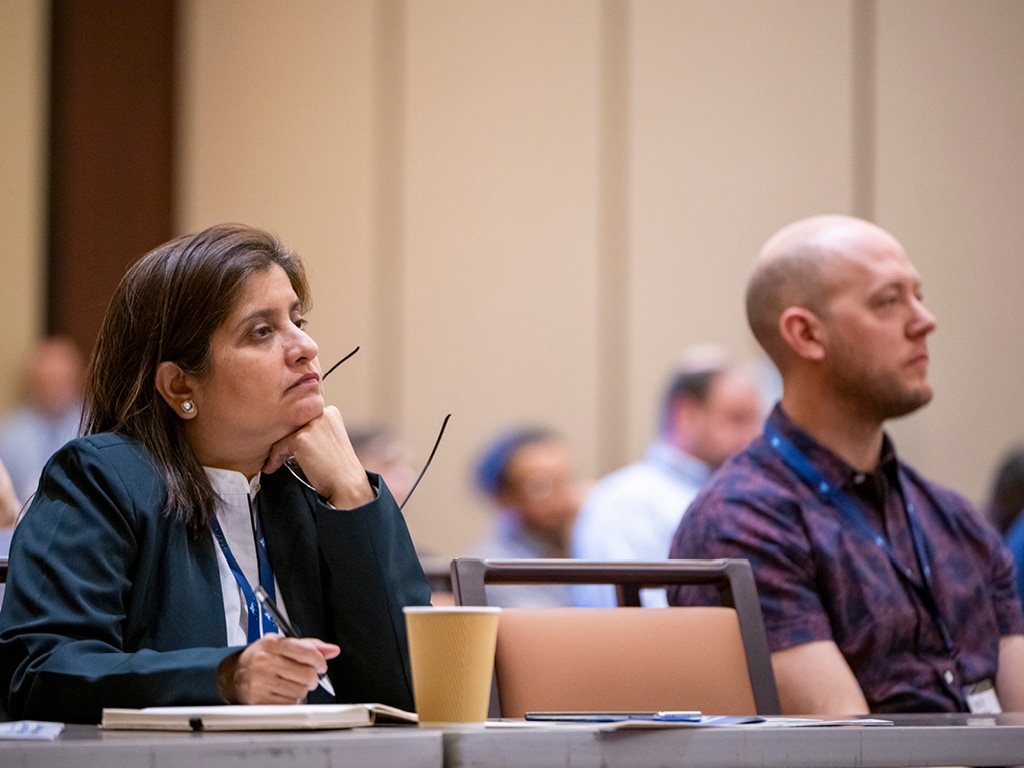
Workshops create more room for participation, problem-solving, discussion, and applied learning than a traditional conference session.
At the 2026 Lab Design Conference, attendees worked through laboratory planning, design risk, and code challenges using guided exercises, case studies, real-world scenarios, collaborative work, and expert-led discussion.
The 2027 lineup brings that interactive approach to three new challenges: designing laboratories for long-term performance, embedding safety throughout the project lifecycle, and making sure the right people and information shape critical project decisions.
Traveling to Dallas on Monday?
Workshops begin at 2:30 PM on Monday, May 10.
If you’re arriving in Dallas that day, give yourself enough time to reach the Hyatt Regency Dallas, check in, and be ready before your workshop begins.
If your travel schedule would make a Monday arrival tight, consider arriving Sunday so you have more time to settle in.
Plan Your Travel
FAQ
Frequently asked questions
All three workshops take place on Monday, May 10, 2027, from 2:30–4:30 PM at the Hyatt Regency Dallas.
Three workshops are available:
- From Programming to Punch List: Designing Labs That Work
- Safety by Design: From Concept to Lab Operations
- The Right Voices: Better Information, Better Lab Design
No. All three workshops run concurrently from 2:30–4:30 PM, so attendees must select one.
No. Workshops are optional add-on experiences and require a separate ticket.
Each workshop costs $215 per person in addition to conference registration.
Start with the challenge most relevant to your work.
Choose From Programming to Punch List if you’re interested in how project decisions affect laboratory operations and long-term performance.
Choose Safety by Design if you’re interested in identifying and addressing safety risks throughout the project lifecycle.
Choose The Right Voices if you’re interested in stakeholder engagement, gathering better project information, and making sure the right perspectives influence design decisions.
Yes. The 2027 workshops will offer AIA continuing education credits.
Specific credit details and designations will be provided with each workshop once finalized.
Expect a more interactive and applied experience than a traditional conference presentation.
Depending on the workshop you choose, you may work through real-world scenarios, facilitated discussions, collaborative exercises, stakeholder mapping, lifecycle analysis, or the development of practical tools and approaches you can use beyond the conference.